Sarah, Author at Lawn Solutions Australia - Page 15 of 33

A New Home for the Brisbane Lions

Brighton Homes Arena – Springfield, QLD

The Australian rules football team, The Brisbane Lions, recently unveiled their new state-of-the-art facility, Brighton Homes Arena. The facility is the result of 10 years of planning which involved finding funding and partners to bring everything together into one modern and multi-functional site

Prior to this newly built facility, the Brisbane Loins used a range of venues around Brisbane including:

  • Giffin Park, Coorparoo – Training Field
  • The Gabba – Gym
  • Nudgee College and QSAC stadium – Track
  • Pre-season games in different venues around Brisbane

Brighton Homes Arena has a capacity of 8,000 spectators with the scope to expand on this in the coming years. The facilities for teams are unique in that the men’s and women’s facilities are identical, with equal gym, changing rooms, and office spaces to give both teams the same opportunities. This was really important for inclusivity with the new arena being home to the Brisbane Lions AFLW Team for both training and matches.

Brighton Homes Arena

The Brighton Homes Arena playing surface covers 1.9 hectares and is built on a 280mm sand profile. AFL Queensland were the leading subcontractor on design of the oval and commissioned Labosport to do the specifications for the field and engaged Twin View Turf for field construction and Irri-Flow Contracting for the design and installation of the irrigation system.

The ground was specified with TifTuf Hybrid Bermuda turf to complete the project. TifTuf was introduced as a new and improved turf variety in recent years with superior drought tolerance, tensile strength and colour retention benefits the key reasons behind its selection.

Brighton Homes Arena

The field and surrounds are managed by AFL Queensland, and the principal contractor for the construction was Hutchinson’s Builders. AFL Queensland is excited to have a newly developed hybrid bermuda grass on the oval, leading the way in innovation, and performance, plus it looks incredible. Chris Dalton has been employed by AFL Queensland as a Sports Turf Manager for the last 17 years, including time at Ashgrove and Nudgee Golf Clubs as well as the Gabba. Chris now oversees the new Brighton Homes Arena as well as other venues around Brisbane and the Gold Coast.

The Arena covers a broad home base for several teams, and the oval is used on average 12-18 hours per week for training.

  • Brisbane Lions Men’s AFL training – 3 days per week
  • Lions VFL – Training and playing, March to November
  • Lions AFLW – Training and games, March to November
  • Lions Academy program – Training and games plus community and open days

Field construction on the oval began in June 2022 and was completed on 14th October 2022, with the last roll of TifTuf turf laid. AFL Queensland took over maintenance of the field and 10 days later, the oval was aerated and top-dressed with 192 tonnes of topdressing. The first training season for the Lions AFLW team was on the 21st of November, and on Sunday 26th of November, the Grand Final of the AFLW competition was played at the new Arena.

Brighton Homes Arena

The turf is cut at 16mm and water harvesting is undertaken from a 4,800lt under-field tank from drainage water and pumped into a 300,000lt main irrigation holding tank. The end of January 2023 saw the oval scarified again and top-dressed with 64 tonnes of topdressing. A pre-season AFL game was played on 3rd March 2023, with the Brisbane Lions facing off against Geelong.

This new arena has given the Brisbane Lions, both men and women a home base with a world-class facility all on one site.

turf talk magazine

The ‘Lawn Tips’ Par 3 Project

By Ben Sims

I started in the turf industry when I was 20 years old, and I worked on a golf course for eight years in a country town in NSW called Orange. I was fortunate enough to have a lot of experience with different grass cultivars and had the opportunity to not only work on a golf course with bent grass greens but also on a hybrid couch bowling green.

As soon as I finished my apprenticeship my passion for turf increased dramatically and I was addicted to researching and learning as much as I could. I would read every article I could find online, and I bought multiple books to help increase my knowledge and understanding.

This love for turf then sparked a passion to teach others how to look after their own lawns which is what ultimately pushed me to start my YouTube channel, Lawn Tips. I uploaded my first video on the 25th of May 2017. My goal was to upload a video once a week consistently and give people not only “Lawn Tips” but provide entertainment as well. Two years later I quit my job on the golf course and went into a full-time Job on YouTube talking about grass.

In the second year of my apprenticeship, I had started to dream of owning and building my own golf course but had always thought that was a little farfetched and impossible. Fast forward to the present day and my dream has become a reality!

The Par 3 Project

My wife and I purchased a 12-acre property in 2021 and the Par 3 project was born!

Taking on this Par 3 build has presented many challenges and I have learnt so much more than I had ever expected to.

ben sims par 3

The first hurdle was making sure we had sufficient water to water the green, fairways and tees. We only have rainwater storage on the property and no access to town water. I was told that people who sunk bores in our area had very little flow and a minimal chance of water, but I decided to take the risk and sink a bore on the property. If you’ve ever sunk a bore before you know how risky it really is. You could be $30k out of pocket with a 200m hole in the ground with no water to show for it. Thankfully we found water at about 60m underground and had a flow of 500 gallons/hour which was enough to fill up some water storage tanks to then pump some water onto the course.

The build officially started on the 4th of September after nearly 12 months of rain delays.

ben sims par 3

The Subgrade

The first step in building a golf green is building the foundation which is known as the subgrade. This is where the levels of the final grade of the green are determined. This was by far the most difficult part of the whole process due to constant revisions on the final shape and undulations on my green. The final size of the green I shaped is 500m2 (the subgrade doesn’t have to mirror the finished grade but it’s important to get as close as possible to prevent movement in material and levels over time).

ben sims par 3

Subsurface Drainage

The next step is the subsurface drainage which is designed to help move excess water from the profile, so the green is playable even after heavy storms. 100mm ag pipe was used in a herringbone pattern to collect as much water as possible. 200m of pipe was used over the whole of the green surface.

ben sims par 3

The Gravel Layer

The gravel layer is also used to remove excess water from the green surface and help to prevent the sand from clogging up the drainage. The gravel also creates a perched or suspended water table in the sand, increasing its ability to retain nutrients and moisture. The gravel layer should be within 1 inch of the final grade of the green surface (100 tonnes of gravel was used at 100mm in thickness).

ben sims par 3

The Sand Layer

The sand layer is what the bent grass is established on. Golf greens are built with sand to help move water, allow more traffic, and promote a stronger, more dense root system.

The sand is 300mm thick which equates to about 260 tonnes of sand. I spent 3 weeks shaping, watering, and compacting the sand so it was ready for grass. This can be done in 2-3 days, but I sowed my surrounds during this time to prevent soil eroding onto the green itself.

ben sims par 3

Sowing The Green

On the 23rd of February, I sowed the bent grass into the sand. I watered the seed 4 times a day to help with germination and by day 6 the seed had germinated. The green was then mowed on day 14 and would be mowed every 2-3 days for the next 4 weeks.

ben sims par 3

At the 6-week mark, I start to mow daily, and liquid fertilisers are applied weekly to help promote growth and build up nutrients in the sand profile. At the time of writing this article (1st of May), the green is 11 weeks old and is nearly filled in.

ben sims par 3

Next Steps…

Now that the green is built it’s time to start working on fairways and tee boxes.

This will include irrigation installation, shaping fairways and building elevated tee boxes.

ben sims par 3

Grass Selection

 To help save water on the course I have decided to select warm season grasses for the fairways. For the larger fairway, I have selected TifTuf Hybrid Bermuda. It’s a great grass for the climate here with its superior drought tolerance and ability to hold good colour leading into the cooler months.

ben sims par 3

For the Fairway toward the back of the paddock, I have decided to go with some Sir Grange Zoysia. I’m excited to try some zoysia out on the property as I don’t have a lot of experience with it. Sir Grange Zoysia was specifically bred for the golf industry, it’s very versatile and is used on some of the best courses in the world, so it’s pretty cool to have here in Orange.

I’m still undecided on the grass types for my tee boxes, but they will be warm season grass again to help with water. I’m leaning towards a hybrid couch due to quicker repair rates with divots and traffic. I look forward to providing an update as the build progresses further towards the end of the year.

turf talk magazine

Benefits of Lawn Care Professionals

For most Australians, lawn care can easily be looked after by themselves, but sometimes you might need an extra hand to help. We look at some of the common reasons why you may need to get in a lawn care professional to help in your garden.

Are you time-poor?

For the most part, your lawn maintenance won’t take up a large chunk of your time, depending on the size of your lawn. However, if you are time-poor or unable to keep up with your lawns mowing requirements, you may want to consider hiring a lawn contractor who can do this for you. There are plenty of local lawncare businesses that operate across Australia that can help with your lawn maintenance needs, whether it be mowing to weeding.

Access to commercial-grade products

If you are tackling a particularly nasty weed invasion, lawn disease or pest, a commercial-grade chemical may be required for treatment. These can be expensive, and application can be more hands-on than domestic-style lawn care products.

This is where a lawn contractor can come in handy. Using a contractor who specialises in spraying commercial chemicals will ensure you can get on top of the issue present without needing to purchase or use commercial products.

Spring lawn renovations

Throughout the warmer months, you may want to renovate your lawn. A lawn renovation can help reset your lawn or address soil composition, thatch, or soil compaction issues. A lawn renovation usually consists of weed removal, dethatching, aerating, fertilising, preventative insecticides, pre-emergent herbicides, top dressing, and watering for recovery. Doing a renovation can be a time-consuming and laborious task. So bringing in a lawn care professional to do this can be an ideal option.

lawn renovation

Struggling with a particular weed or disease?

Pesky weeds including onion weed, ryegrass, nutgrass and other invading grass types, and diseases like dollar spot, brown patch, and winter fusarium, can be more challenging to remove. A lawn contractor can come out to your property and identify what weed/disease your lawn has. The contractor will then be able to treat the issue appropriately.

If you are struggling with a particular lawn issue and want to treat it yourself, our team of lawn experts here at Lawn Solutions Australia can assist. You can reach out to us on our social media accounts and send us some photos of the issues you are facing. We can then recommend the best treatments to get the area back on track.

weed removal

For more lawn care tips and advice, check out our other lawn care blogs here.
Essential Lawn Care Equipment

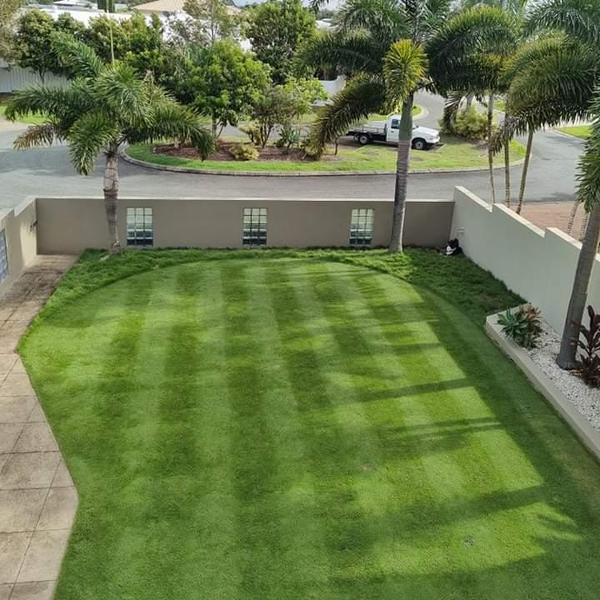
Welcome to our guide on essential lawn care equipment! Whether you’re a seasoned green thumb or a beginner ready to delve into the world of lawn maintenance, having the right tools will help you achieve a healthy and picturesque lawn. In this blog, we will explore a variety of must-have lawn care equipment.

Skip to: sprayers and knapsacks, fertiliser spreaders.

What Lawn Mower is Best for Me?

Lawn mowers are the first piece of lawn care equipment you should have in your garage. Mowing your lawn regularly will not only help ensure your yard is kept tidy but will help keep your lawn healthy. Purchasing your own mower is worth the investment. Regular mowing is important whether you want to do minimal work with your lawn or take it to the next level.

mowing lawn

We recommend mowing your lawn frequently enough so that only one-third of the leaf is removed with each pass. This is known as the one-third rule. During the warmer months, while your lawn is actively growing, you will need to mow more frequently compared to the cooler months when grass slows in growth. Mowing your lawn using the one-third rule will help limit the amount of stress caused to the plant and help avoid scalping.

The type of mower you decide to go with will depend on a few factors, including lawn size, budget, and personal preference. The popular go-to choice for most home owners is the rotary mower. Rotary mowers are especially popular for buffalo lawns, including Sir Walter DNA Certified, Zoysia Australis and Kikuyu lawns as they prefer a higher cut. Rotary mowers have spinning blades rotating on a vertical axis under a cutting deck. They work best on a medium to high cut and are now available as both petrol and battery powered. Some trusty rotary mower brands to look out for include Honda, Victa, Toro, Bosh, Ryobi, Masport, Ozito, Makita and Husqvarna.

different mower types

If you have a couch lawn, like TifTuf Hybrid Bermuda, or a Zoysia lawn like Sir Grange Zoysia, or are after a lower cut, you may want to consider using a cylinder mower. Cylinder mowers will also produce a cleaner cut compared to a rotary mower as it will cut the grass and not tear it.

For more information on choosing a mower for your lawn, check out our blog on Guide to Buying a Mower.

Why Should I Use a Knapsack or Pressure Sprayer?

Now that we have mowing your lawn under control let’s look at how you can apply other lawn care products to get the most out of your turf. Most lawn care products will come in a concentrate that need to be dissolved in water. This mix can then be applied to the lawn with a knapsack or pressure sprayer, allowing the product to be evenly applied.

There are a few different types of sprayers that you can use, from battery powered, handheld and backpack sprayers, each with different water volume sizes. For a smaller lawn, a smaller handheld sprayer like the Husqvarna 1.5L Manual Sprayer can do the job effectively. For a larger area, you should consider using a backpack sprayer or a battery powered sprayer like the 8L Battery Handheld Sprayer, or the Husqvarna 15L Battery Backpack Sprayer.

colourguard plus

What Are the Advantages of Using a Fertiliser Spreader?

For using granular fertilisers and other granular products, you will get a much more even product application of your product when using a granular spreader compared to spreading the granules out by hand. When the trigger is pulled on a fertiliser spreader the granules are dispersed at an even rate. Fertilising without a spreader can result in an uneven growth throughout your turf.

Like the other products mentioned, a range of options are available for different area sizes. Handheld spreaders are ideal for small to medium lawn sizes. If you have a larger area, a battery-powered handheld spreader or a walk-behind spreader can be an easier option to use.

premium fertiliser

For more lawn care tips and advice, check out our other lawn care blogs here.
Why a Thicker Lawn is Better at Blocking Out Weeds

Is your lawn looking a bit sparse and are constantly facing an uphill battle of weeds in your lawn? In this blog, we look at how a thicker lawn can naturally block out weeds from growing.

Skip to: mowing for a thicker lawn, fertilising for a thicker lawn, increasing sunlight for a thicker lawn, aerating for a thicker lawn

Why can a thicker lawn block out weeds?

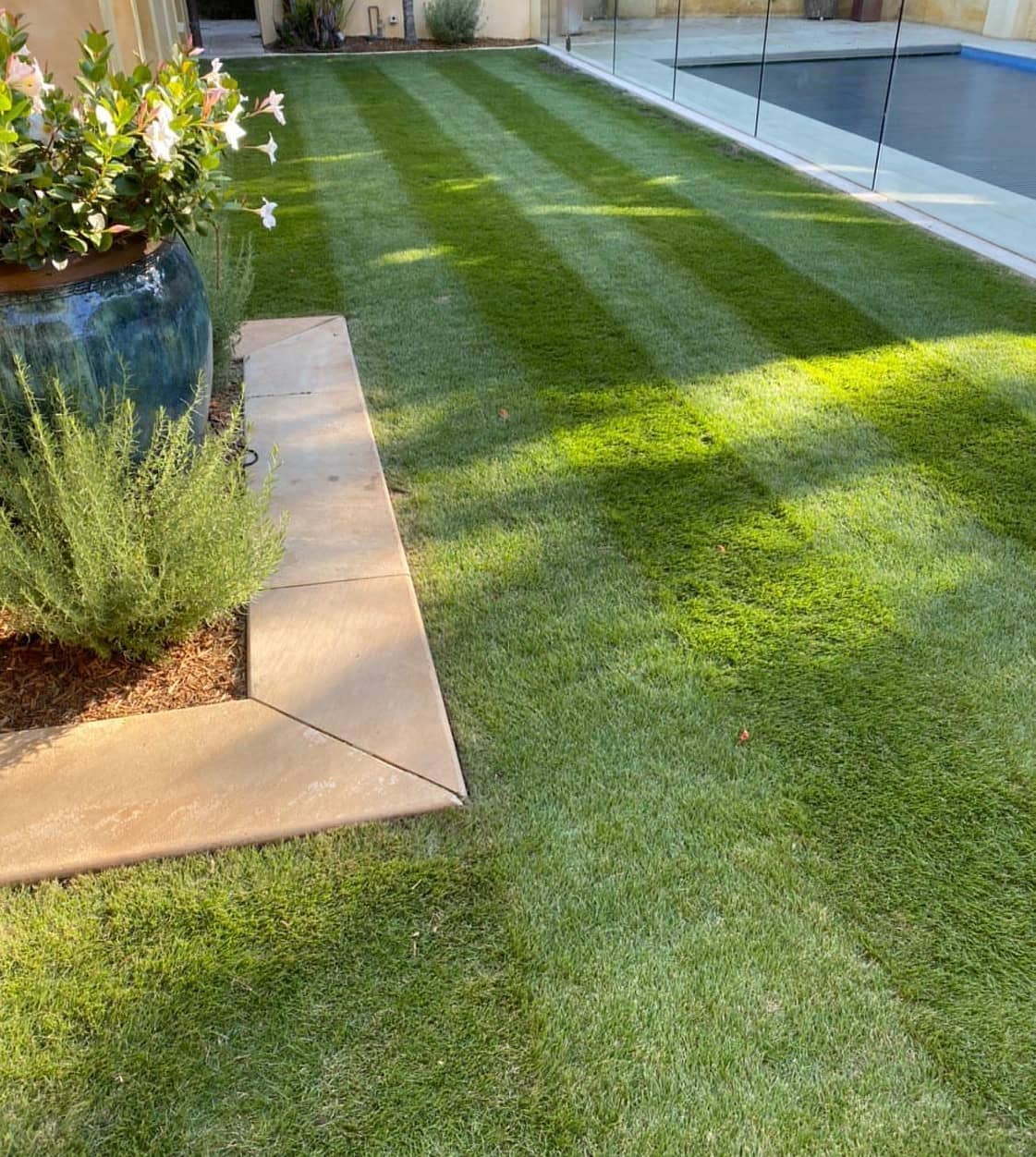
A thicker lawn is better able to block out weeds as there is less space in the profile for the weed to grow. When your lawn is thick and healthy, there is also increased competition for resources, including soil, nutrients, and sunlight. Without the weed having access to these resources, it becomes challenging for weeds to grow.

which grass should i choose?

How can I help thicken up my lawn?

Now that we know thicker lawns are better at stopping weeds, let’s look at how you can thicken your lawn.

How can mowing make my lawn thicker?

Mowing is an important factor to help keep your lawn thick. When incorrect mowing techniques are used, your lawn becomes more stressed, thin and sparse. So, how should I be mowing my lawn?

Mowing regularly will help promote lateral growth. It is this lateral growth that helps your lawn become thicker. Mowing regularly at the same height will allow for consistent nutrients within the grass, keeping it healthy. We recommend mowing regularly enough so that only one-third of the leaf is removed with each mow. When a lawn isn’t mown regularly, it causes the grass to become stressed as lots of the leaf is removed. This can cause your lawn to thin out, making it more susceptible to weeds.

Mowing your lawn in different directions will also help keep your lawn thick. If you always mow your lawn in the same direction, the grass tends to stay pointed in that direction. By mowing in different directions, you will help the leaf grow straight up, leaving more room for the blades to grow next to it.

mowing lawn

Will fertilising my lawn help it grow thicker?

Applying fertiliser will help give your lawn a boost in growth. By providing the lawn with the nutrients it needs, you will help with the overall health of the lawn. When it comes to using fertiliser, it is best to use a well-rounded fertiliser that contains all the nutrients your lawn needs. Something like our Lawn Solutions Premium Fertiliser or Exceed Liquid Fertiliser is ideal to help thicken your lawn to block out weeds.

exceed liquid fertiliser
Exceed Liquid Fertiliser

Shop Online Now

lawn fertiliser
Lawn Solutions Premium Fertiliser

Shop Online Now

Increasing sunlight to shaded areas

Is your lawn struggling to thicken up in highly shaded areas? Turf is like any other plant; it needs sunlight to photosynthesise and grow. Shade-tolerant turf types like buffalo, usually need a minimum of 3-4 hours of direct light. Other turf types like couch and kikuyu will usually require more sunlight, usually 5-6 hours minimum to thrive. If your lawn is struggling due to insufficient light, we recommend increasing light to the area where possible by pruning back some of the surrounding trees and shrubs. Check out our blog for more information here.

shade lawn

Will aerating help thicken my lawn?

When soil is compacted and hard, it can be difficult for air, nutrients, and water to reach down to your lawn’s roots. By aerating your soil and decompacting the soil base, your lawn will be able to grow its roots deep into the soil to produce a stronger, more vigorous lawn. Aeration is also advantageous as it can help prevent many compaction-related problems, including drainage issues, bare patches, fungal disease, dryness and more.

So, how do you aerate your lawn? You can aerate manually using a sturdy garden fork if you have a small area. Simply insert the fork into the lawn and wriggle it back and forth to fracture the soil profile. If you have a larger area, consider using a spiked roller or hiring out a motorised lawn aerator. For more information on aerating your lawn, check out our blog here.

aerating

We hope this blog has shared some insights on how you can thicken up your lawn to better block out weeds. For more lawn care tips and advice, make sure you check out our other lawn care blogs here.
How to Apply ColourGuard Plus

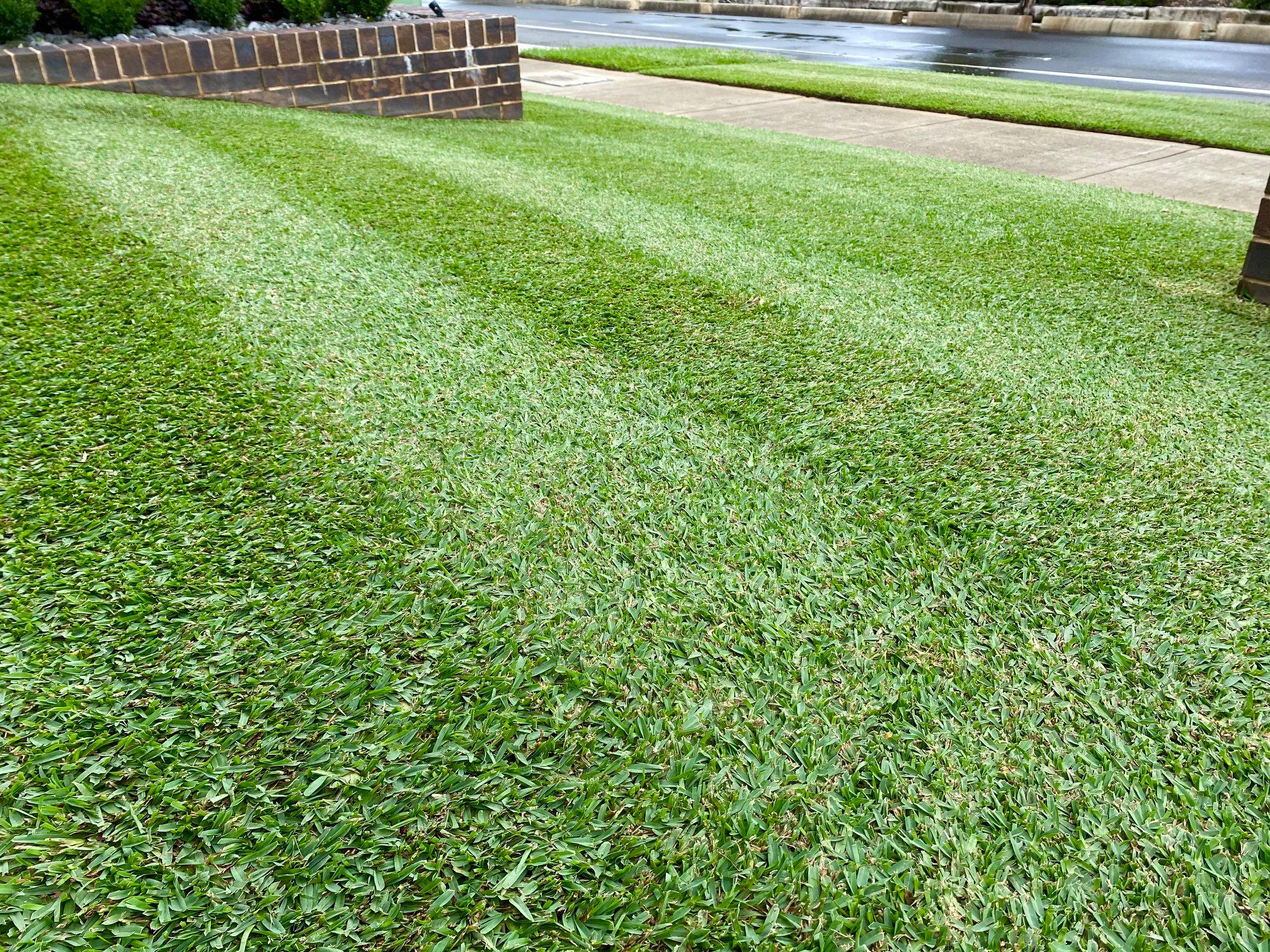
ColourGuard Plus is a fantastic lawn pigment that can instantly improve your lawn’s colour. ColourGuard is especially great to use in winter when lawns can naturally lose some colour. In this blog, we go into detail of how to apply both the ready-to-use and concentrate ColourGuard Plus.

Skip to: How to apply Colourguard Plus hose on?, How to apply ColourGuard Plus concentrate?, Common questions on applying ColourGuard Plus

Watch Application Video

What sizes does ColourGuard Plus come in?

ColourGuard Plus comes in a variety of sizes to suit both home and commercial applications.

Shop Online Now

How to apply ColourGuard Plus hose on?

1.Shake bottle well

How to apply colourguard

2. Remove cap and screw on hose on attachment (if needed)

How to apply colourguard

3. Attach hose to connector

4. Turn on hose

5. Remove green tab (or black tab connected to plug on updated mechanisms)

How to apply colourguard

6. Pull black tab up to allow product to spray

How to apply colourguard

How to apply colourguard

7. Once finished, push black tab back down to stop water flow and plug in tab

8. Turn off hose

How to apply ColourGuard Plus concentrate?

Watch Application Video

1. Shake bottle well

colourguard concentrate

2. Measure out how many m2 you are wanting to cover

3. Use the application rate table to determine your application rate

colourguard guard application rate

3. Measure how much ColourGuard Plus will be needed

CGP concentrate

4.Fill your tank with water first, then add the recommended amount of pigment

colourguard application

5. Give your tank a quick mix to ensure the concentrate has diluted throughout the tank

6. Spray your mix to the area

spraying colourguard

7. Once finished, give your sprayer and nozzle a rinse with clean water

If you want to increase the intensity of the pigment, you can add more ColourGuard Plus to your sprayer.

Colour Guard Plus Product Brochure

Common questions about applying ColourGuard Plus

  • Is ColourGuard Plus safe to use on all lawn types? Yes, ColourGuard is safe to use on all lawn types!
  • Is ColourGuard Plus safe to use around pets? Yes, it is safe to use around pets. However, we recommend keeping pets off the lawn for a few hours to ensure the pigment has properly dried and absorbed into the leaf. After the pigment has been absorbed, we also recommend watering the lawn to wash off any excess product the grass hasn’t absorbed.
  • Can ColourGuard Plus be used year-round? Yes, it can be applied at any time throughout the year.
  • How long will the pigment last on the lawn for? Once applied, the pigment is locked into the leaf. Therefore, the pigment will be removed with the leaf when the lawn is mown.
  • What can I do if I apply the ColourGuard to another surface? If you apply the pigment to another surface, it is best to wash it off immediately with water to avoid staining.
  • Will ColourGuard Plus work on dead grass? As this product needs to be absorbed into the leaf of the grass, it will work best on a lawn that is healthy. If applied to a dead lawn, the grass won’t be able to absorb the pigment. It may still give it a slight green up; however, it won’t work as effectively when applied to healthy grass.

PRECAUTIONS

• Do not apply to wet or dew affected grass

• Avoid footpaths, driveways and other hard surfaces

• Allow up to 24 hours before desired result

• Allow adequate time for lawn to dry before walking on or applying water

• It’s advisable to water well 2 to 3 days after application to wash off any excess.

IMPORTANT CLEANING INFORMATION

  • For common hard surfaces like concrete, we recommend using a two to one mixture of white vinegar and bi-carb soda and scrubbing with a scrubbing brush. Leave this for 5 minutes or so and then remove with a clean cloth or hose it off.
  • For tiles specifically, but also sealed concrete, one of the most effective methods is to scrub with lemon juice concentrate, using the same method.
  • If the stain is on a porous hard surface or is being particularly stubborn you can use a dedicated concrete cleaner – If doing so, be sure to follow label rates and instructions to avoid damaging grout or concrete when using these products.

Due to the porous nature of some hard surfaces, some stains may not be removable, but should fade with time.

Unsealed Concrete or porous surfaces – Concrete Cleaner
Tiles or Sealed Concrete – Lemon juice, Vinegar & Bi-Carb Soda

SAFETY:

Keep out of reach of children. Avoid contact with eyes and skin. If contact occurs, flush with water and consult a doctor. May be harmful if swallowed. If accidental ingestion occurs consult a doctor.

See Material Safety Data Sheet below and additional information at lawnsolutionsaustralia.com.au or please call 1300 883 711. Lawn Solutions Australia is not responsible for any misuse of this product.

Product Brochure PDF

Product Label       Safety Data Sheet

If you would like to know more information on applying ColourGuard Plus or any of our other lawn care products, please reach out.

Should I Be Concerned About Dew and Frost?

Dew and frost are natural phenomena that occur on the surface of the earth. As a lawn owner, you may wonder what the effects of dew and frost on your lawn are and if you should be concerned. In this blog, we will explore the causes of dew and frost and their impact on your lawn.

Skip to: Does dew affect my lawn?, Does frost affect my lawn?

What is dew and frost?

Dew and frost on a lawn will form like condensation on a cup when cold water is poured in. Dew and frost can form on lawns as the temperatures drop overnight and the temperature of the grass cools down. When the grass becomes cool enough, the once warm air that surrounds the grass can cool also. When this happens, the water vapour in the air around the grass can no longer hold as much water, causing tiny water droplets to form on the grass. This is known as dew.

If the temperatures are cool enough (below freezing, 0 degrees Celsius), the water may turn into a solid (ice) and cause frost on the lawn.

FACT – Did you know that humid areas are more likely to experience dew? This is due to the air holding more moisture.

Does dew affect my lawn?

Now you might be asking yourself, does dew affect my lawn? No, dew won’t affect your lawn, and it will simply dry once the sun comes back up.

However, if your lawn has dew, we recommend waiting until it has dried to mow. While your lawn is wet with dew, the water droplets can cause the leaf blade to bend. If the lawn is mown when the leaf is bent, the mower can miss the leaf. Once the lawn dries, the leaf will stand back tall, resulting in an uneven look.

FACT – Did you know areas that need to be mown in the early morning like golf courses, will often brush off the dew before mowing?

dew lawn

Will frost affect my lawn?

Like dew, frost will dry with the morning sun. On warm-season grasses like buffalo, couch, zoysia and kikuyu, frost can cause discolouration and damage to the leaf blade of the grass.

Here are a few tips to help minimise the effect of frost on your lawn:

  • Keep off the lawn whenever there is frost on it. This includes mowing. By walking across it, you are causing the blades to break and cause more damage.
  • A light watering in the morning before the sun rises can help the frost on the lawn melt. By watering the lawn, the frost will melt quicker and more evenly. A very quick water of 30 seconds to a minute will do the job.

winter frost

The health of your lawn is one of the most important factors in ensuring your turf can tolerate frosts. Using a fertiliser with increased iron before winter will help strengthen your lawn for the frosty months ahead.

iron guard plus labelexceed liquid fertiliser

If your lawn has become affected by frosts and you want to improve the colour of your lawn, why not use a lawn pigment like ColourGuard Plus to restore your lawns colour instantly!

For more lawn care tips and advice, make sure you check out our lawn care page here.

The Top 10 Lawn Care Mistakes to Avoid

When it comes to lawn care, there are some activities that your turf will praise you for, but others that should be avoided. In this blog, we look at what lawn care mistakes to avoid that can cause more damage than good.

Skip to:Infrequent mowing, Compacted soil base, Over fertilising your lawn, Letting weeds invade your lawn, Watering incorrectly, Incorrect application of lawn care products, Not enough sunlight, Poor drainage, Blunt mowing blades, Soil pH is too acidic or alkaline?

1. Infrequent Mowing

One common lawn care mistake is not mowing your lawn frequently enough. Not mowing your lawn frequently can result in having an overgrown lawn and can cause extra stress to your grass. This stress can make your lawn thin and sparse, especially after mowing.

So how should I mow my lawn? We recommend using the one-third rule when mowing. This rule looks at mowing your lawn regularly enough so that only one-third of the leaf is removed with each pass. During the cooler months, the lawn will be growing at a slower rate. This means you won’t need to mow as frequently. However, during the warmer months, you will need to mow more frequently to keep up with accelerated growth.

mowing lawn

2. Compacted Soil Base

When a lawns soil base is compacted, it can be more difficult for water, nutrients, and air to travel down to your lawn’s roots. It also makes it more difficult for your lawn to establish a good root system. Some issues that can arise from a compacted soil base include drainage issues, bare patches, weeds, dry patch, and fungal diseases, to name a few.

What can a compacted soil base be caused from? Compaction mainly occurs when there is heavy traffic on your lawn and a lack of water.

So, what should you do if your lawn has a compacted soil base? We recommend giving your lawn an aerate with a garden fork or use a tyne aerator to help alleviate compaction. For more information on how to aerate your lawn, check out our blog here.

3. Over-fertilising Your Lawn

Applying fertilisers to your lawn is a good thing and can help improve the health of your lawn. But too much of a good thing can cause harm to your lawn. Over-fertilising your lawn will cause sudden plant growth. The problem with this is that the roots won’t experience the same amount of rapid growth and will then be unable to supply the water and nutrients your grass needs. In addition, as fertiliser is primarily made up of mineral salts, excessive fertilising will cause salts to build up in the soil, making it difficult for water to be absorbed, drying out your grass, causing discolouration and possibly even plant death if bad enough.

When applying fertilisers to your lawn, it is best always to follow the correct application rate and instructions and ensure you water correctly after application.

4. Letting Weeds Invade Your Lawn

Having weeds grow your lawn is expected from time to time. But if weeds are left untreated, they will continue to grow and spread throughout your lawn. Therefore, treating weeds as they appear to prevent the spread is best.

If you are unsure of what type of weed you have growing or are unsure how to treat the weed you have growing, check out our blog here.

5. Watering Your Lawn Incorrectly

When it comes to watering your lawn, there are a few golden rules to follow:

  • Water your lawn for longer, less frequently.

This will help encourage your lawn to grow its roots deep down into the soil profile, helping improve the drought tolerance of your lawn.

  • Water in the morning before the heat of the day.

It is best to avoid watering in the late afternoon and evening to help stop your lawn from sitting damp overnight. Watering at this time can lead to fungal issues as the lawn will sit damp for a long period of time. Watering in the morning can help prevent these issues from arising.

water lawn

6. Incorrect Application of Lawn Care Products

One common lawn care mistake is incorrectly applying lawn care products. When using lawn care products, it is vital to ensure you read and follow application instructions and rates. If these are not followed, the product may be ineffective with what you want to achieve. It can cause other issues, including burning and in extreme cases, killing your lawn. If you are unsure of how to apply a lawn care product, it is always best to check with the product manufacturer before application.

7. Not Enough Sunlight

Just like all plants, grass too needs sunlight. Sunlight allows grass to produce the food it needs to survive. Glucose, otherwise known as sugar, is produced by the grass and is used as food to help your lawn grow. Without sunlight, your lawn will not be able to produce glucose, causing the grass to thin out and die.

While all turf varieties need sunlight to thrive, some are more shade tolerant than others. This means some varieties can better absorb sunlight than others. Generally, the wider the leaf blade on the grass, the more shade tolerant a turf variety will be. If you are unsure of what turf type is best for your area, it is best to have a chat with your local turf supplier.

shady lawn

8. Poor Drainage 

A lawn with poor drainage can develop many problems. These include fungal, disease, weed infestation and even lead to your grass dying. So, correcting any issues with your lawn’s drainage will help prevent issues from arising next time you get a large downfall of rain.

So how can you combat drainage issues on your lawn? Check out our blog for more information here.

9. Blunt Mowing Blades

Another common lawn care mistake is mowing with blunt mower blades. Did you know your mower blades will go blunt over time, like a razor? Blunt mower blades will rip at your grass. This not only looks bad but isn’t good for the health of your lawn. If you suspect that your mower has blunt blades, or are wanting to do a routine check-up, tilt the mower up with the front wheels pointing upwards and the handle flat to the ground.

When inspecting the mower blades, if they have any cracks, bends, extremely thin blades or even holes in the blades fin – then your blades need to be replaced. If there is still plenty of meat left on your blades and they are in their correct shape, they may simply need to be sharpened.

For more information on checking and replacing your mowers blades, check out our blog here.

lawn mower blades

10. Soil pH is Too Acidic or Alkaline?

If your lawn is not performing very well or not responding to fertiliser, this could be due to your soils pH. pH is a measure of acidity and alkalinity. Most lawns like to be in the 6 to 7.5 range for optimum performance. Measuring a soil’s pH is easy to do and doesn’t involve a complicated scientific experiment. All you need is a pH testing kit and they are readily available at hardware stores and nurseries, or online through our online store here.

If your soil’s pH is outside the recommended range of 6-7.5 you may need to adjust this. Check out our blog for more information here.

ph testing for lawns

We hope this blog shares some common lawn care mistakes that should be avoided in your backyard. For more lawn care tips and advice, make sure you check out our other lawn care blogs here.
What Does Iron Do for Lawns?

Iron (Fe) for Lawns

Are you looking for a way to help extend your lawns colouring throughout the cooler months? Well, iron might be your answer! The main benefit of using iron is to help improve your lawns colouring, especially when lawns are entering dormancy. In this blog, we look at all you need to know about using iron on your lawn.

Skip to: What are the other benefits of using iron?, When should I use iron?, Golden rules to follow when applying iron, Precautions when applying iron, Should I use a fertiliser with iron?, Why should I use iron without fertiliser?, How can I make my lawn green instantly?.

Will Iron Make My Lawn Greener in Winter?

The short and straightforward answer is yes, but there is more to it. Iron, also known as Fe, helps grass photosynthesise and create chlorophyll. As a result, it will improve colour and allows it to carry out cellular functions.

Are There Any Other Benefits of Using Iron?

There are a few other benefits to using iron. These include helping control moss, strengthening your lawn, can help limit the impact of frost and helping make your lawn more disease resistant. For more information on how to help a frost affected lawn, click here.

Before Iron Guard Plus
After using Iron Guard Plus

When Should I Use Iron?

Iron is best used on a healthy and strong lawn. It is best used to help improve your lawns colour, especially when heading into or out of dormancy.

When it comes to using iron products, we recommend using our Lawn Solutions Iron Guard Plus.

iron guard plus
Iron Guard Plus

Golden Rules to Follow When Applying Iron

When applying iron, it is best to avoid it in the heat of the day. If it has been used when temperatures are at their warmest, some burning can occur. We also recommend applying Iron Guard monthly when active growth is present or when nutrient deficiency symptoms are visible to maintain even growth and colour for your lawn. We also recommend making sure your plant is healthy and not stressed before application. When applying all lawn care products, it is always best to ensure you use as per the label application instructions and application rates.

Precautions to Take When Applying Iron

Avoid applying iron to footpaths, driveways, and other surfaces. When iron is applied to hard surfaces, it can cause rust-coloured stains. If you use a liquid product and some spray has been applied or drifted to another surface, it is best to wash it off immediately. When applying iron, ensure you use it on the lawn evenly, as it will show if you don’t.

Should I Use a Fertiliser That Contains Iron?

Suppose you want to apply iron but also want to apply other nutrients. In that case, we recommend using a well-rounded fertiliser like our Lawn Solutions Premium Fertiliser or Exceed Liquid Fertiliser. Both fertilisers contain iron and a balanced ratio of nutrients your lawn needs to stay healthy.

lawn fertiliser
Lawn Solutions Premium Fertiliser
Exceed 2.5L Concentrate

If you want to apply fertiliser throughout the cooler months, it is best to use a liquid product like Exceed over granular fertilisers. This is because liquid fertilisers can absorb nutrients more effectively while the grass has entered dormancy compared to granular fertilisers.

Why Should I Use Iron Without Fertiliser?

However, in some circumstances, if you have a specialised lawn care program which already meets your lawns nutrient requirements, additional nutrients from a fertiliser may not be required and a separate iron product like Iron Guard Plus is best used.

How Can I Make My Lawn Green Instantly?

If you want to give your lawn an instant green-up without applying iron products, why not use a lawn pigment product like ColourGuard Plus! One application of ColourGuard Plus can provide up to 3 months of fantastic colour. It is safe for all lawn types and can be used anytime throughout the year. For more information on how ColourGuard Plus can help green up your lawn, click here.

ColourGuard Plus 2L Hose On

For more lawn care tips and advice, make sure you check out our lawn care page here.

Craziest Lawn Mowers

Lawnmowers are a staple tool for maintaining a well-manicured lawn, but not all mowers are created equal. In fact, some mowers can be downright crazy! From oversized and overpowered machines to wacky designs that are more reminiscent of a carnival ride than a lawn tool, crazy lawnmowers come in all shapes and sizes. In this blog, we’ll take a closer look at some crazy lawnmowers that are built a cut above the rest!

World’s Fastest Lawn Mower

Stunt drives Jessica Hawkins drives a Honda ride on mower, fitted with a 200-horsepower engine, the same engine as Honda’s Fireblade, fitted under the hood of the mower. This mower was still fitted with a mowing deck to cut grass, a requirement needed to be awarded with the world’s fastest lawnmower!

This mower can accelerate from zero to over 160km/h in just 6.29 seconds!

fast mower

Credit: CNN

The Lazy Man’s Power Mower

The Mechanix Illustrated magazine in 1958 features ‘The Lazy Mans Mower’! This mower claimed to allow you to mow the lawn and run your errands, all while being inside the air-conditioned bubble! Unfortunately, this mower never made it into production.

lazy man mower

Credit: Awesome Jelly

Motorcycle or Mower?

Would you call this one a motorcycle or mower?

lawn mower motorcycle

Credit: Pinterest

Still After a Cylinder Cut?

If you are still after a nice low cut with a cylinder, why not give this mower a try.

cylinder lawn mower fun

Credit: Yeah Motor

John Deer with Some Slight Modifications

This will be sure to make mowing a quick task to complete!

john deer lawn mower modifications

Credit: Pinterest

Red Makes it go Faster, Right?

A new paint job will be sure to catch the eyes of onlookers from your street!

lawn mower modifications

Credit: Pinterest

Custom Polaris Mower

Are you looking for a bit more power? Maybe the Custom Polaris Mower is more your style.

crazy lawn mower

Source: ATV.com

If you are after some more mowing tips to help keep your lawn looking great, make sure you check out our other lawn mowing blogs on our site here.